How to Price DTF Merch for a Small Business
Most small shops price DTF merch by copying a competitor and hoping. Here is the actual math: blank plus transfer plus labor plus margin, with gang sheets protecting the number.

Pricing is where most small merch businesses quietly lose money. You buy a blank, press a transfer, sell the shirt, and it feels like profit because cash came in. Then you count press time, the reprint you ate, and the sheet you half-wasted, and the real margin is thin or gone. DTF is a great product to build a business on because it has no minimums and needs no screens, but that flexibility only pays if you price from your real cost up, not from a competitor's price down.
The four things every price has to cover
A DTF shirt price is not one number, it is four numbers stacked. Skip any one of them and you are subsidizing your own customers. Every shirt you sell has to cover the blank, the transfer, the labor to press it, and a margin on top.
- Blank cost: what you paid for the actual shirt, hoodie, or tote, plus the shipping to get it to you.
- Transfer cost: your share of the DTF film for that design, which is really the square inches it takes up on a sheet.
- Press labor: the minutes it takes to weed, position, press, and peel, valued at what your time or an employee's time is worth.
- Margin: the profit that keeps the lights on, buys the next roll, and pays you for running a business rather than a hobby.
Work out your true all-in cost
Start with one shirt and be honest about every input. Take the blank price you actually pay, not the sticker price on a website. Add the transfer cost for that specific design, which depends on how large it is and how efficiently it sits on a sheet. Add a realistic labor figure by timing yourself pressing ten shirts and dividing. Total those three and you have your all-in cost, the floor no price should ever fall below.
This is also where a lot of shops undercount. Press labor feels free when it is your own hands, but the moment you want a day off or a second person, that time has a price. Ready-to-press transfers from a shop like ours remove the printing and maintenance work entirely, so your labor number is just the pressing, which makes it far easier to calculate and far more predictable.
Set the margin, then the price
Once you know your all-in cost, the margin decision is a business decision, not a guess. A boutique brand with strong art and a loyal audience can carry a bigger multiple than a shop competing on plain blanks at a market table. Look at what similar sellers charge, then position your price where your all-in cost still leaves room to run promotions, absorb the occasional reprint, and reinvest.
A reprint guarantee like the one we offer helps here, because it caps your downside on defects. You still want margin wide enough to survive a bad batch, a returned order, or a customer who changed their mind, without that one event erasing the profit from the ten sales around it.
Protect the margin with gang sheets
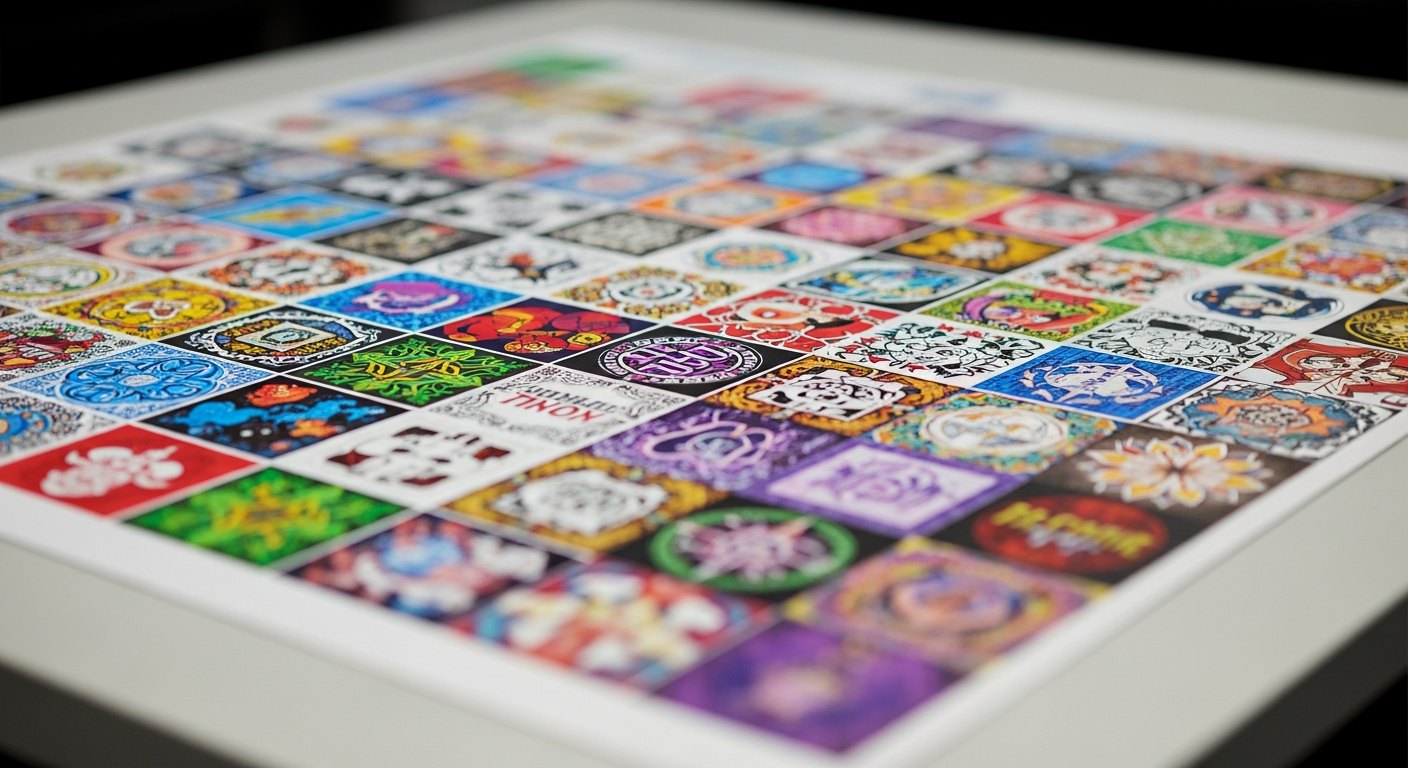
The single biggest lever on your transfer cost is how you buy the transfers. Ordering designs one at a time means paying for wasted film around every graphic. Gang sheets fix that: you fill one sheet of film with many designs and pay for the sheet, which drops your cost per design as you pack it tighter. That lower per-design cost flows straight into your margin.
Build your recurring designs on a gang sheet at /builder, set the quantities you actually sell in a normal month, and let the sheet fill up. The more you nest onto it, the cheaper each transfer gets, and the cushion between your cost and your price grows. If you sell single ready-to-press items for one-off custom orders, keep those separate and price them higher, because convenience is worth paying for and one-offs carry more handling per unit.
A quick worked example
Say your blank costs a few dollars, your ganged transfer works out to a modest share of a full sheet, and pressing takes a couple of minutes of your time. Add those honestly and you have your floor. Now set retail at a multiple that clears that floor with real room left over. Do not remember the number, write it down, because the temptation to shave the price for a friend or a bulk buyer is where margins die.
Build a simple pricing sheet
You do not need accounting software to price well, you need one spreadsheet you actually update. Give each product a row with its blank cost, its transfer cost, a labor estimate, your all-in floor, and your set retail price. When a blank supplier raises prices or you switch to a heavier shirt, change one cell and see instantly whether your margin still holds. This habit turns pricing from a gut feeling into a number you can defend to a wholesale buyer or a customer asking for a discount.
The same sheet makes tiered pricing easy. Offer a single-shirt price that carries full margin and handling, then a lower per-shirt price for bulk orders where a full gang sheet has already cut your transfer cost. Now your discounts come out of real savings instead of your profit, and a large order becomes something you can say yes to with confidence rather than dread.
Common pricing mistakes to avoid
- Pricing off the blank only. The shirt is the cheap part. Price the finished, decorated product.
- Forgetting your own labor. Free time is not free the day you want to scale or take a break.
- Assuming one shirt costs the same per unit as a hundred. It does not. Volume and full gang sheets lower your unit cost, so single orders should carry a higher price.
- Never revisiting your numbers. Blank prices and shipping change. Recheck your all-in cost every few months.
- Racing competitors to the bottom. A price that does not cover all four inputs is not a sale, it is a slow loss.
The bottom line
Price DTF merch to cover blanks, transfer, labor, and margin, in that order, and let gang sheets pull your transfer cost down so the margin has room to breathe. DTF gives you no minimums and no screens, which means you can start small and price honestly from day one. Get the math right on one shirt and the rest of the business scales on top of a number you can trust.
Frequently asked questions
Auto-nesting, low-res warnings before you pay, shipped same-day from Texas.
Open the builder →