What Is UV DTF? Stickers for Hard Surfaces Explained
UV DTF is a peel-and-stick transfer for hard surfaces like tumblers, glass, and metal. It needs no heat press, but it is not for shirts.
If you sell tumblers, mugs, or anything with a hard surface, you have probably seen UV DTF and wondered how it relates to the DTF transfers you press onto shirts. They share a name and a similar look, but they are two different products for two different jobs. Mixing them up leads to peeling stickers on a shirt or a mug you cannot press. Here is the plain version of what UV DTF actually is.
The short version
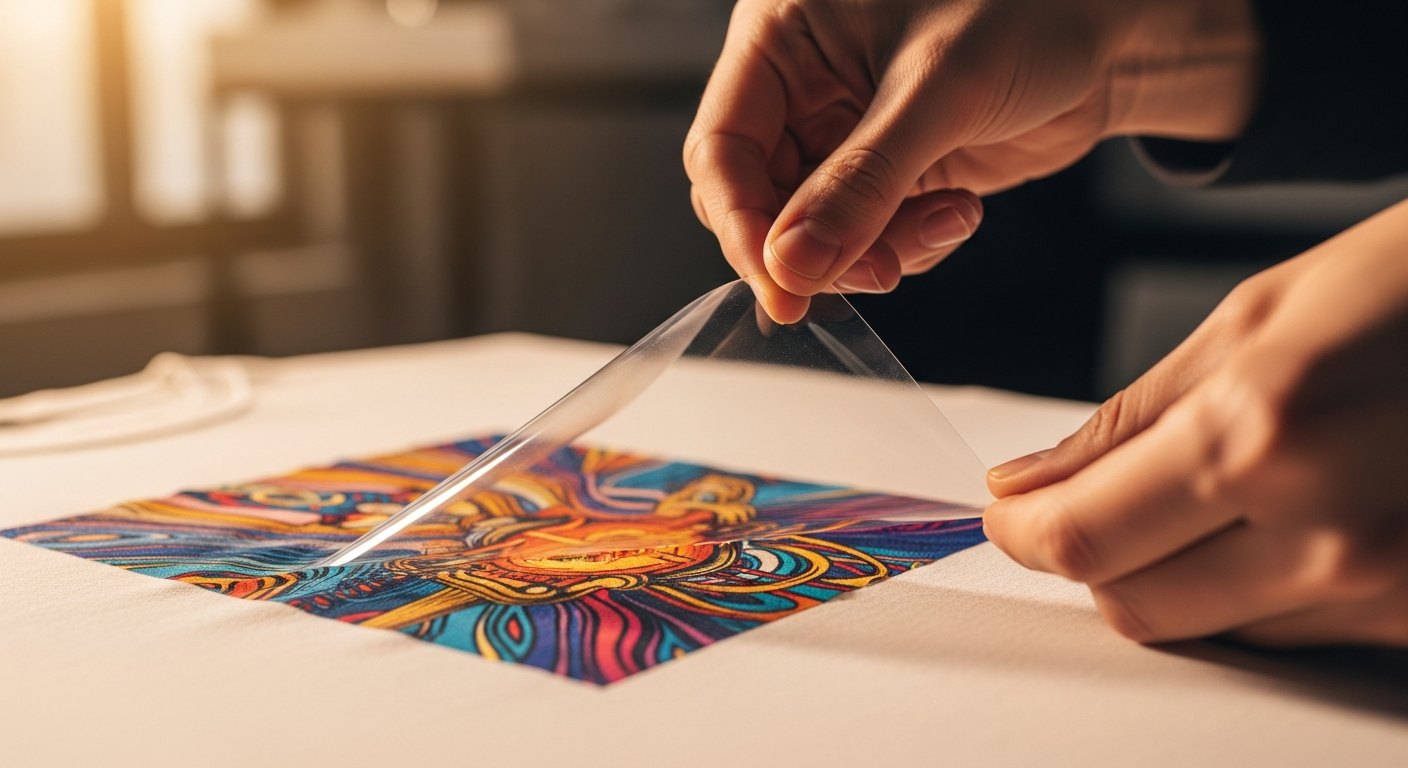
UV DTF is a three-layer transfer sticker for hard, non-fabric surfaces. The design is UV-printed onto a film, coated with an adhesive, and topped with a transfer layer. You peel it, press it onto a hard item by hand, rub it down, and peel the top layer away. No heat press, no oven, no curing gun. It sticks like a very durable sticker that looks printed into the surface rather than laid on top.
How UV DTF is different from regular DTF
Regular DTF is ink plus adhesive powder printed on a film, then heat-pressed into fabric. When you press it and peel the carrier, the film comes off and the ink and adhesive stay bonded into the shirt so it can survive the wash. UV DTF skips the fabric and the heat. It bonds to a rigid surface using pressure and a UV-cured adhesive, which is why it holds on smooth materials that a heat press would never work on.
- Regular DTF needs a heat press. UV DTF is applied by hand pressure.
- Regular DTF goes on cotton, blends, and dark or light garments. UV DTF goes on glass, metal, acrylic, wood, ceramic, and hard plastic.
- Regular DTF survives machine washing. UV DTF is meant for items you hand-wash or wipe down, not a laundry cycle.
What you can put UV DTF on
Think of any smooth, rigid item you want to decorate without a press. UV DTF is built for exactly that.
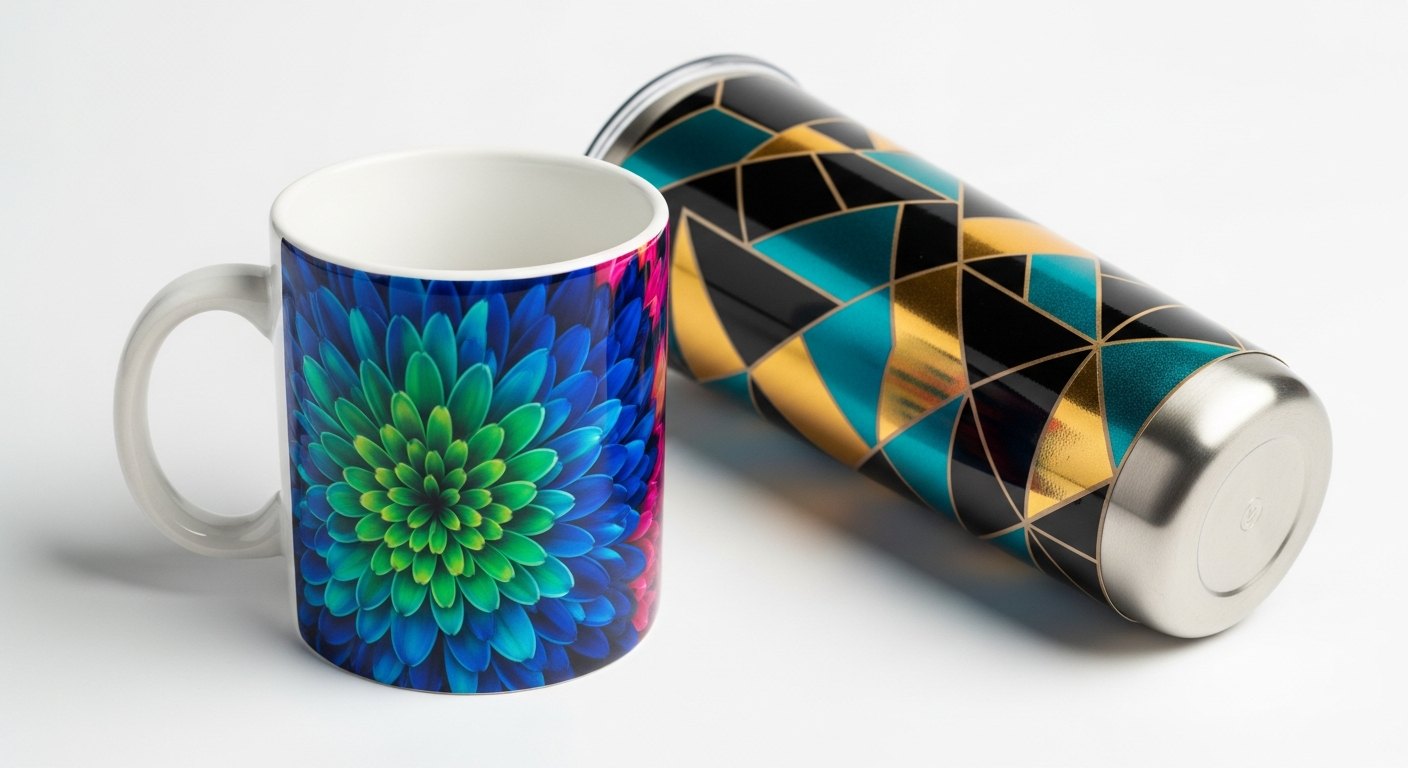
- Tumblers, water bottles, and stainless steel cups
- Coffee mugs and glassware
- Candle jars, vases, and ceramics
- Laptops, phone cases, and hard plastic
- Wood signs, metal tins, and painted surfaces
The design wraps to the curve of a cup and lays flat on the surface, so it reads as if it were printed directly on the item. That is the appeal for anyone doing personalized drinkware or small-batch branded goods without buying an engraver or a printer.
Why shops choose UV DTF over the alternatives
For decorating hard goods, the usual competitors are adhesive vinyl, laser engraving, and sublimation on coated blanks. Each has real drawbacks that UV DTF sidesteps. Vinyl is limited to solid cut shapes and struggles with fine detail and full-color art. Engraving removes material and is one color, the color of the surface underneath. Sublimation needs a special coating and a heat press and still will not work on plain glass or metal. UV DTF prints full color, handles fine detail and gradients, and sticks to raw hard surfaces without any coating or heat.
- Full-color, photo-quality art in a single application, no color-count limits.
- No special coating required on the blank, unlike sublimation.
- No cutting, weeding, or layering like adhesive vinyl.
- Wraps cleanly around curved items like tumblers and bottles.
For a small shop, that combination means you can offer a wide catalog of drinkware and hard goods without owning a printer, a laser, or a press for each material. You keep the transfers on hand and apply them to order.
How to apply UV DTF
Application is the easy part, which is the whole point of the product.
- Clean the surface so it is free of dust, oil, and fingerprints.
- Peel the design off its backing layer.
- Line it up and lay it onto the item, pressing from the center outward.
- Rub the whole design firmly with a squeegee or a credit card to seat the adhesive.
- Slowly peel away the clear top transfer layer, leaving the design behind.
Take your time seating it on curved surfaces so you do not trap air bubbles. Once it is down and burnished, it holds. For everyday care, hand-wash the item and avoid soaking or scrubbing directly over the design.
When to choose UV DTF over regular DTF
The decision is entirely about the surface. If the blank is fabric and it goes in a washing machine, you want regular DTF transfers, which you can order ready to press or build yourself on a gang sheet in our builder. If the blank is a hard, smooth item that never sees a wash cycle, UV DTF is the right tool. Trying to force one into the other job is where quality problems start.
For shops selling both apparel and drinkware, running both makes sense. You press DTF onto the shirts and stick UV DTF onto the tumblers, and your whole product line stays consistent in look without needing separate equipment for each.
Care and durability
UV DTF is tough for what it is, but a hard-surface sticker is not indestructible. It resists water and everyday handling well, which is why it works on cups and bottles that get used daily. The wear points to know about are heavy scrubbing, prolonged soaking, and the dishwasher. High heat and aggressive detergent cycles can lift the edges over time, so hand-washing is the safe default for anything decorated with UV DTF. Applied to a clean surface and burnished down firmly, a UV DTF design will hold its color and stay put through normal use for a long time.
One practical tip: keep the design slightly away from the very top rim of a drinking cup, where lips and dishwashing hit hardest. Placing it on the body of the item rather than the drink edge gives it the longest life.
The bottom line
UV DTF is the sticker version of DTF, engineered for hard surfaces and applied by hand instead of a heat press. Use it for mugs, tumblers, and rigid goods, and keep regular DTF for anything you wash. Match the transfer to the surface and both hold up beautifully.
Frequently asked questions
Auto-nesting, low-res warnings before you pay, shipped same-day from Texas.
Open the builder →