How Long Do DTF Transfers Last? Wash Durability Explained
A properly pressed and cared-for DTF transfer lasts 40 to 50 or more washes. Here is what drives that number up or down, and how to land on the high end.
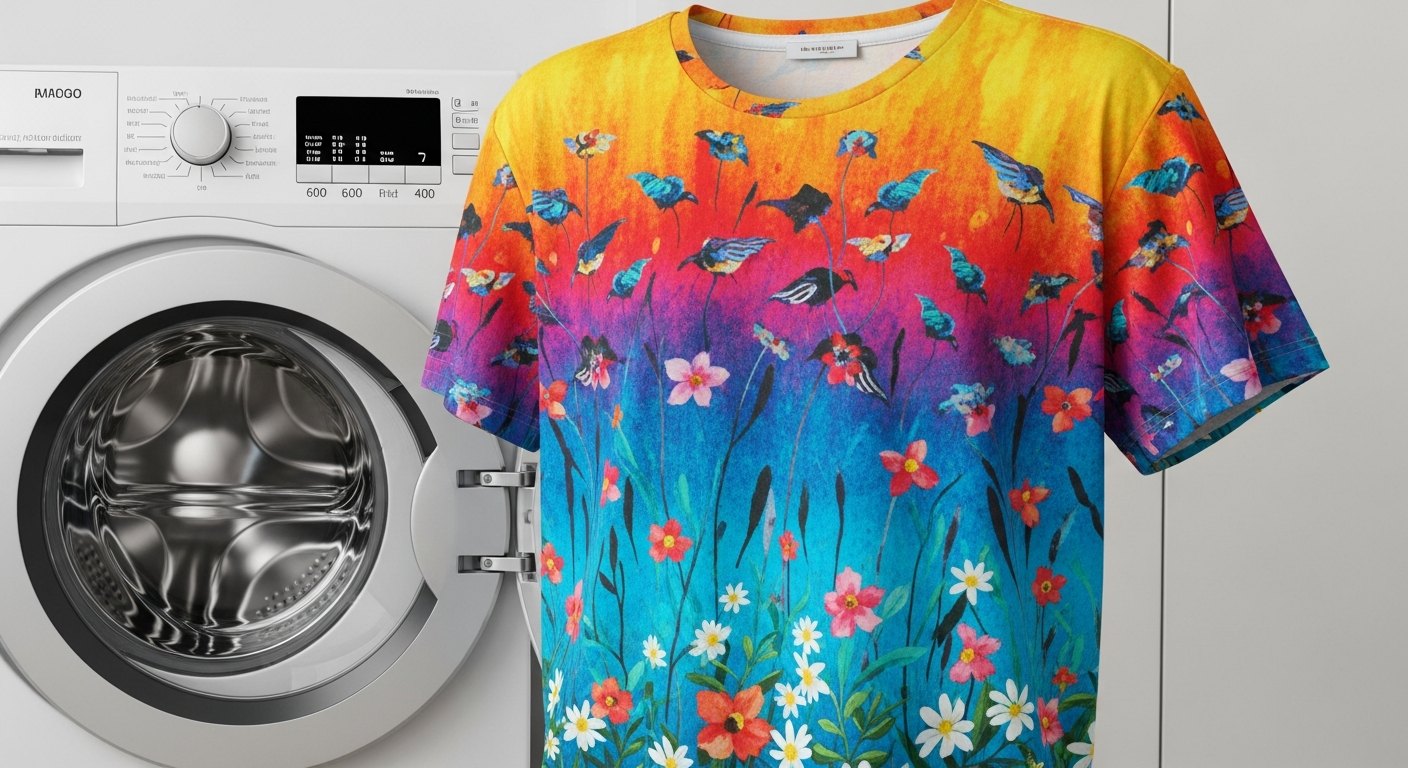
The honest answer to how long a DTF transfer lasts is that it depends almost entirely on how it was applied and how it is washed. Done right, a DTF transfer is one of the most durable garment decoration methods you can buy. It routinely rides out 40 to 50 or more wash cycles, which usually means it outlasts the shirt. Done wrong, the same transfer can start cracking in a handful of washes. The difference is not luck. It is a few controllable factors, and this guide walks through all of them.
What a realistic lifespan looks like
For a transfer that was pressed to spec, post-pressed, and washed with basic care, expect the print to stay sharp and flexible through dozens of washes. Color holds, the print stays bonded to the fabric, and the design keeps its detail. Most people replace the garment for reasons that have nothing to do with the print: it stretches out, stains, or simply falls out of rotation. That is the bar a good transfer clears.
DTF earns this durability because the design is not sitting on top of the fabric like a sticker. Ink plus a hot-melt adhesive powder is bonded into the fibers under heat and pressure, so the print flexes with the garment instead of fighting it. That flexibility is exactly why a good DTF print does not crack the way a stiff, thick print can. Every time the shirt stretches, the print stretches with it and settles back, which is the quiet reason DTF holds up across so many wash-and-wear cycles.
What shortens a transfer's life
When a DTF transfer fails early, it is almost always one of these, and none of them are the fault of the process itself:
- Under-pressing: too little heat, time, or pressure leaves the adhesive only partly melted, so it lets go early.
- Skipping the post-press: the second press after peeling sets the adhesive and is one of the biggest durability boosters there is.
- Too little adhesive powder on the transfer, which starves fine details of the glue that holds them down.
- Hot washing and high-heat drying, especially in the first few cycles before the bond has settled.
- Ironing directly on the print, which can scorch the ink and lift it off.
Notice that most of these happen before the garment ever reaches a customer. The press is where lifespan is decided. That is also why where you buy your transfers matters: a transfer made with proper, even adhesive powder gives you the raw durability to work with in the first place. Our transfers at /transfers and the sheets you build at /builder are powdered and cured to a fixed standard so the bond is there before you ever touch a press.
How to get the longest life from every transfer
If you want to land on the 50-plus-wash end of the range, it comes down to a repeatable routine on the pressing side and clear instructions on the wearing side.
- Press to the film's spec. Most DTF films want roughly 300 to 320 degrees Fahrenheit with firm pressure, but always follow the exact numbers on your film's instructions.
- Verify your press temperature with a heat strip or infrared thermometer, since many presses run cooler at the platen than the dial claims.
- Always post-press. After peeling the film, cover the design with parchment or a Teflon sheet and press again for a few seconds.
- Let the first wash wait a day or two if you can, giving the bond time to fully set.
- Send care instructions with every order so the customer does not undo your work in the laundry.
The wash routine that protects the print
Even a flawless press can be worn down by rough laundry habits. The instructions to pass along are simple: wash cold, turn the garment inside out, run a gentle cycle, and skip the bleach. Hang dry when possible, or tumble on low. Never iron directly on the design; if the garment needs pressing, iron it inside out or lay a cloth over the print. These habits do not just prevent cracking, they keep the colors from dulling, which is the other way a print ages.
Does the garment matter?
It does, at the margins. DTF bonds well across cotton, polyester, and blends, which is part of its appeal, but the garment underneath still affects the perceived lifespan. A thin, low-quality shirt that pills and stretches will look worn long before the print does, dragging the whole garment down. Pairing good transfers with a solid blank is the cheapest way to make both the shirt and the print last. If you are choosing blanks for a run, that decision is worth a few minutes of thought before you press anything.
How wear-and-tear differs from wash damage
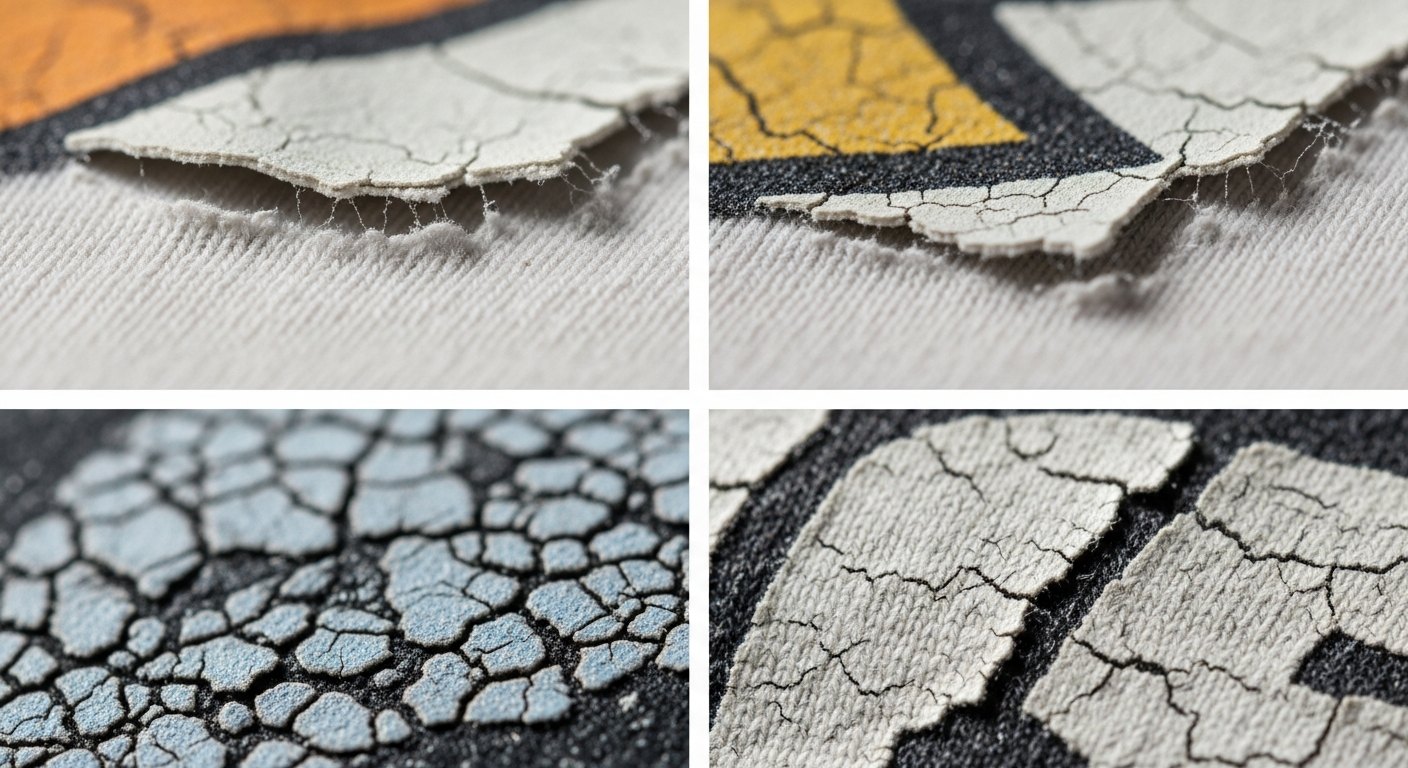
It helps to separate two things that both look like a print aging. Wash damage is the cracking and lifting that comes from a weak bond or a hot laundry routine, and it is preventable. General wear is the slow softening and slight fading that any decorated garment picks up over months of use, and it is normal. A good DTF print ages gracefully on the wear side: it may lose a touch of the initial brightness over dozens of washes, but it stays bonded and readable. What you never want is the sudden, chunky cracking of a bond that failed, because that is the avoidable kind. If your prints are failing suddenly rather than mellowing slowly, the problem is at the press or in the wash, not in the passage of time.
Put it together and the picture is clear. DTF durability is not fragile or unpredictable. Press to spec, post-press every time, start with transfers that have proper adhesive, and wash cold and gentle. Do that and 40 to 50 or more washes is not an optimistic claim, it is the normal, expected result.
Frequently asked questions
Auto-nesting, low-res warnings before you pay, shipped same-day from Texas.
Open the builder →